Ukrainian Co-Design Workshop · Online · 29.10.2026

Memory, rights & sovereignty: AI seen from Ukraine

Ukrainian artists, art historians, musicologists and cultural managers met the ARTIFACT consortium online, between air-raid alerts and power cuts, to discuss how AI is changing art, memory and cultural policy in a country at war.

0
participants
0
guiding questions
0
artistic practices analysed
0
languages, Ukrainian and English
Scroll

The context

Working on AI under war conditions

For Ukrainian creators, digital technology is not only aesthetic experimentation: it is a way to keep working, to preserve identity and to protect heritage threatened with destruction.

  • Air-raid alertsThe hosts could not reach the MARI venue because of an air alarm and traffic: the workshop moved fully online.
  • Power outagesEvery session depends on electricity and connection still being available: “fortunately we still have electricity”.
  • DisplacementSpeakers connected from Kyiv, Kharkiv and Spain; one researcher’s home city, Bakhmut, has been destroyed.
  • Satellite connectivityStarlink and broad access to Midjourney and ChatGPT reshaped digital culture since the full-scale invasion.

Art, memory and wartime documentation

How can AI tools transform artistic creation, the documentation of wartime destruction and memory work?
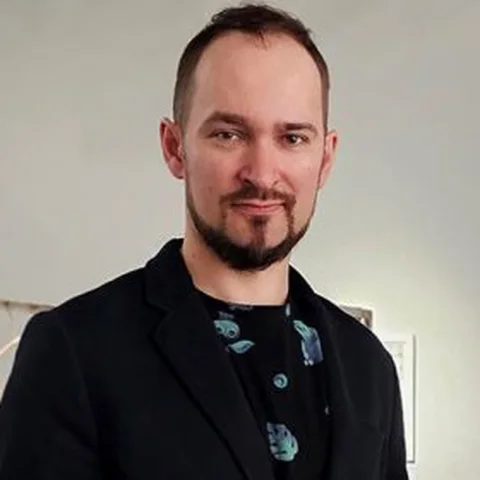
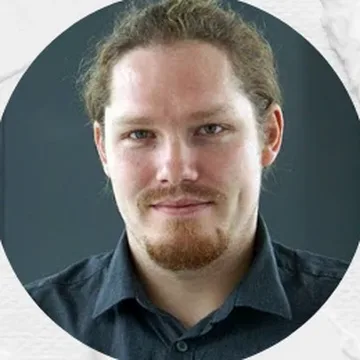
Andrii SydorenkoOMIA Andrii Sydorenko, Olga Musiienko, Inna Antipina
  • Memory
  • Documentation
  • Virtual reality
  • Reconstruction
  • Music to image
  • Ukrainian artists use AI to document damaged cities such as Bakhmut and Kharkiv, build VR installations and imagine damaged ecosystems growing again.
  • AI serves critical modelling and reconstruction, not just polished visual effects.
  • Reconstruction needs care: models can “hallucinate” plausible but inaccurate details, so sources must always be verified.
  • Music-to-image experiments on Skoryk’s Melody show how AI translates time into space and carries cultural memory.
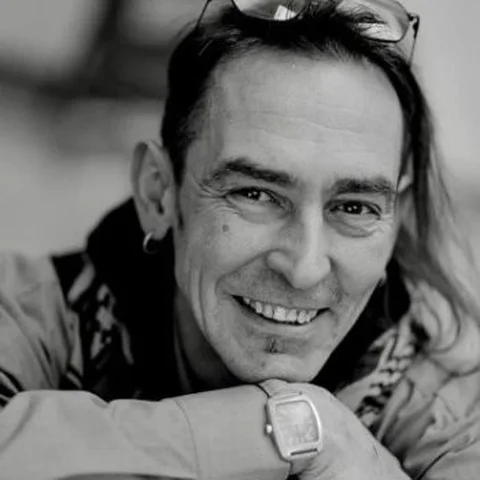
Technological sovereignty

How can Ukrainian artists and institutions keep control of their technology and the integrity of their archives?

OMOleksandr TsegolnykOleksandra Kyriushyna Olga Musiienko, Oleksandr Tsegolnyk, Oleksandra Kyriushyna
  • Sovereignty
  • Archives
  • Access
  • Critical use
  • Aesthetic sameness
  • Sovereignty means deciding independently how to use technology, how to protect creators and where cultural archives are stored.
  • Artists should not stay consumers of ready-made tools: explore their limits, biases, errors and glitches.
  • Same commercial models and same prompts risk a uniform aesthetic that erases individual and regional voices.
  • Scattered national research needs shared digital repositories and bridges to European institutions.

Rights, remuneration and policy

How should intellectual property, fair remuneration and ethical use of AI be regulated?

OMKateryna Honchar Olga Musiienko, Kateryna Honchar
  • Copyright
  • Datasets
  • Royalties
  • Transparency
  • EU policy
  • Training models on artworks without consent or compensation threatens creators’ rights.
  • Researchers and cultural institutions must help write the rules, not adapt to them afterwards.
  • Mandatory dataset transparency and fair royalties are the priorities for EU policy.
  • Ukrainian perspectives must be part of European AI policy-making.

Human agency and embodied AI

How can human-in-the-loop design and embodied AI keep artists in control of co-creation?

Georg RegalOleksandra Kyriushyna Georg Regal, Oleksandra Kyriushyna
  • Human in the loop
  • Tangible AI
  • Co-design
  • Authorship
  • Trust
  • AI systems should be human-centred and physically experienced, not purely market-driven.
  • Humans can stay in, on or above the loop: the choice depends on the task and must stay with people.
  • Artists are co-designers, not just audiences: their uniqueness and rights must be respected.
  • AI is a helper, not a competitor: ideas are born in people, tools only execute them.

Case studies presented by Andrii Sydorenko

Five Ukrainian AI practices

Media art, photography, digital image-making and architecture: how AI changes the way artists transform their sources and imagine possible futures.

  1. 01 / 05

    Onda Melantina

    Bodies, ecology and algorithmic censorship

    Video, VR, 3D-printed sculpture and AI-animated paintings that question how the wounded body and damaged places are seen and remembered.

    • Natural History of Destruction
    • Fog of War
    • Garden State
    • The Arbiter
  2. 02 / 05

    Synchrodox

    Algorithmic photography and couture

    Tanya Shchyhlova and Roman Noven start from their own photographs and collages, then expand them through repeated AI iterations into impossible installations.

    • Point of No Return
    • Reverie
    • Sweet
  3. 03 / 05

    Yura Miron

    Generative visions of renewal

    Generative art since 2019: sustainable solar cities that answer the destruction of Ukrainian cities, and luminous spiritual landscapes.

    • Solara
    • Silent Offering
  4. 04 / 05

    Alena Kotenko

    Memory, fragmentation, alienation

    An idea, many generated variations, then selection and editing: the tool proposes, the artist shapes the emotional meaning.

    • Fragmented Portrait
    • Soft Forms and Memories
    • Distorted Close-up
  5. 05 / 05

    Bogdan Serdiuk

    The architectural scar

    Machine learning for post-war reconstruction where destruction stays visible, opening a public debate on what to restore and what to remember.

    • Memory in Motion
    • Mariupol Theatre proposal

In numbers

What artists and stakeholders told us

ARTIFACT surveys, results to end of September 2026, presented by Francesca Peyron (Mazzini Lab)

117 submissionsfrom 19 countries
0submissions
  • 0 artists
  • 0 stakeholders
How artists use AIShare of artist respondents
  • 0% as a tool
  • 0% as a medium
  • 0% both
A generational divideFrom Kateryna Honchar’s interviews with artists
Established fine artists Hesitation

Fear of the “artificial”, copyright doubts and stigma: many use AI for research or moodboards but deny it.

Students & commercial creatives Daily use

Production design, illustration, academy students: AI is already part of everyday workflows.

Barriers and prioritiesMain issues raised in the surveys and the discussion
  1. Copyright and IP uncertainty
  2. Technical and training gap: most artists are self-taught
  3. High costs of software and hardware
  4. Lack of transparency
  5. Low representation of artists in policy and museums
  1. Fair remuneration and licensing
  2. Mandatory dataset transparency
  3. Support for ethical AI tools
  4. Representation of visual creators in AI policy

In their words

Seven Ukrainian voices

Oleksandr Tsegolnyk
Oleksandr Tsegolnyk Head of the Ukrainian Board · Perfect Art Group

“We have come together precisely to bridge existing gaps, create a shared environment for collaboration and integrate into the broader European context.”

Andrii Sydorenko
Andrii Sydorenko Artist & art historian · MARI

“The digital image doesn’t simply illustrate trauma: it makes us consider how trauma is seen, reconstructed and remembered.”

OM
Olga Musiienko Cultural studies · Kharkiv State Academy of Design and Arts

“Technological sovereignty doesn’t necessarily mean developing our own technology. It means deciding independently how we use it and how we protect creators.”

Kateryna Honchar
Kateryna Honchar Art historian · Research advisor to the Ukrainian team

“Even artists who use AI tools often say they don’t, because a certain stigma is still attached to its use.”

Asmati Chibalashvili
Asmati Chibalashvili Composer & art historian · MARI

“My work combines music composition with academic research: composers in many countries have been experimenting with AI since the 2010s.”

Oleksandra Kyriushyna
Oleksandra Kyriushyna Cultural manager · NGO Cultural Assembly

“AI cannot replace human beings: ideas grow only in human hearts. Look at it not as a competitor but as a helper, and use it responsibly.”

IA
Inna Antipina Musicologist · National Academy of Music of Ukraine

“Each listener experiences the music in their own way, and so does each AI model: all these interpretations can coexist.”

Quotes lightly edited from the interpreted transcript of the session.

Volodymyr Padun
Studio visit · Kyiv · 03.11.2026

Collaborative Study Lab

In the studio of Volodymyr Padun

A second-generation painter, Head of Scenography and Multimedia at the National Academy of Fine Arts and Architecture, and a key figure of 1990s Kyiv nonconformism. With a master who already commands every traditional technique, the visit asked one question.

“How should we use AI?”

  • Progress or stagnation?
  • Simplification or manipulation?
  • Does “simplification” even exist in the artistic process?
  • Can technology replace mastery, or lift it to levels never reached before?

Outcomes

What Ukraine asks of the network

  1. 01Structured AI educationFormal academic and vocational programmes, from copyright and ethics to hands-on technique.
  2. 02Sovereign archivesDigital heritage kept on secure, locally governed infrastructure, with creators’ rights protected.
  3. 03Critical, not passive, useProbe tools, biases and glitches to avoid a uniform, commercial aesthetic.
  4. 04Fair rules for datasetsDataset transparency, licensing and fair royalties at the centre of EU policy.
  5. 05Bridges across EuropeShared repositories and institutional ties so Ukrainian voices shape international policy.
  6. 06More voices in the researchWider survey participation, especially younger and Ukrainian creators.

Next steps

Online studio visits with Ukrainian artists, a shared collection of Ukrainian research papers, the international residency at X-OP in Slovenia (September 2027) and the ARTIFACT position paper to the EU.